

Best Places to Visit in India: A 30-Year Expert’s Guide to the Must-See Regions

After more than 30 years in the travel industry—and several trips through different parts of the country—India remains one of the most layered, complex, and ultimately rewarding places I recommend. It’s not always easy, and that’s part of the appeal. Done well, a journey through India becomes less about ticking off landmarks and more about the experiences that unfold along the way. Here is our complete guide to the best places to visit in India.
The Golden Triangle: the best places to visit in India
Exploring Delhi, Agra, and Jaipur
For a first visit, I find the Golden Triangle to be the most logical introduction. It links Delhi, Agra, and Jaipur in a way that gives a strong sense of India’s history and contrasts without requiring long travel distances.
Delhi sets the tone. It’s busy, layered, and at times overwhelming, but it provides important context for everything that follows.

Agra, of course, is home to the Taj Mahal—it brought me to tears, and no one leaves it unmoved. Mind you, I got engaged there, and you can see a very happy couple in the photo.
The view of the Taj is particularly wonderful at sunrise. \
Agra is often combined with a visit to the ghost city of Fatehpur Sikri, a testament to the glory of the Moghal civilization.

Jaipur brings in Rajasthan’s royal heritage, with forts and palaces that feel both grand and lived-in. Nicknamed the Pink City, Jaipur is crammed with palaces and bazaars, including the Palace of the Winds and the City Palace. Don't forget the nearby massive Amber Fort.
I often recommend The Golden Triangle route as a foundation, not the entire trip. It works best when combined with one or more regions that offer a different pace or landscape.
Rajasthan Travel: Forts, Palaces, and the Blue City

Udaipur, Jodhpur, and Jaisalmer
Rajasthan is where many travellers feel they’ve stepped into the India they imagined.
Jodhpur, the Blue City, has an incredible energy, with its jumble of houses and shops lining inding medieval streets and guarded by the mighty Mehrangarh Fortress, an architectural masterpiece.
Jaisalmer, further west, offers something else entirely—desert landscapes, quieter roads, and the opportunity to spend a night out among the dunes.
Udaipur is usually where I suggest slowing things down. The lakes and palaces create a more relaxed atmosphere, especially after the pace of Delhi.
What makes Rajasthan work so well is the variety within a single region. You get history, architecture, and culture, but also space to breathe.

Camel Fair and villages
Laid-back Pushkar transforms each November during the vibrant Pushkar Fair. One of the last great traditional melas, the fair unfolds as a lively mix of livestock trading and carnival atmosphere, drawing farmers, merchants, and villagers from throughout Rajasthan and even as far as Central Asia, creating a colourful and deeply rooted cultural spectacle.
And if you have the chance, anywhere in Rajasthan, take an open jeep, oxcart or bicycle into the countryside and visit a rural village. These are not often seen by Western eyes and it was one of my favourite experiences in India.
Kerala: A Softer Side of India

Backwaters, Tea Plantations, and Houseboats
After northern India, I often direct clients south to Kerala, and for good reason. The shift in pace is noticeable almost immediately. Trips often start in Kochi, the first European trading post in India, an old town that retains its character of quiet colonial town.
Nearby, the Kerala backwaters offer one of the most relaxing experiences I’ve had in India. Travelling by houseboat through narrow canals lined with palms and small villages offers a completely different perspective on the country. It’s quiet, unhurried, and surprisingly immersive.

Further inland, the tea plantations around Munnar bring cooler air and rolling landscapes, while the coast provides time to simply slow down. Also inland, Periyar and Thekkady provide a quieter experience, with guided walks and spice plantations offering a glimpse into the region’s natural side.
Kerala works particularly well for travellers who want balance—something I always try to build into a longer itinerary.
Spiritual Varanasi: Sunrise on the Ganges River

Intense but unforgettable
Varanasi is not for everyone, and I’m always upfront about that. It is India in a nutshell - intense, deeply spiritual, and at times confronting. But for those open to it, it becomes one of the most memorable parts of a trip.
I still remember my first sunrise boat ride on the Ganges—boats drifting past the ghats as the city slowly came to life. Then a hawker showed up, in a boat, selling snow globes featuring the Taj Mahal. I had an out-of-body experience right then and there.

The energy that comes with throngs of joyful pilgrims is palpable as people cleanse and purify themselves and sing and pray along the river. You may even see bodies being cremated, the ashes quietly carried off by the waters of the holy Ganges.
In the evening, the aarti ceremony transforms the riverfront into something almost theatrical, yet deeply meaningful.
Varanasi is a place I recommend carefully, but when it resonates, it tends to stay with people long after they’ve left.
Northern India and Ladakh: For Space and Mountains

A Different Kind of India
For travellers who prefer landscapes and a bit of distance from the crowds, I often look north. Ladakh feels like a different country altogether. The altitude, the Buddhist monasteries, and the stark mountain scenery create a quieter, more contemplative experience. It’s not a casual addition—it requires time to acclimatise—but it rewards those who make the effort.
Other areas like Himachal Pradesh also offer good options for walking, fresh air, and a slower pace. These regions tend to appeal to travellers who enjoy nature and a more understated experience.
Exploring the South's Cultural Heart

Temples, Heritage & Everyday Life
Travelling through Tamil Nadu in the deep south reveals a rich blend of history, architecture, and living traditions. In Kanchipuram and Mahabalipuram, ancient temples from the 6th to 8th centuries showcase remarkable Dravidian craftsmanship, with Mahabalipuram’s seaside setting adding to its appeal.
Puducherry offers a distinct contrast, where French colonial influences linger in its charming bougainvillea-lined streets.
Further inland, Thanjavur impresses with the monumental Brihadisvara Temple, while Madurai pulses with energy around the vibrant Meenakshi Temple.
Goa, Kovalam, and the Andaman Islands: Time to Unwind

India at the Coast
Not every trip to India needs to be high energy from start to finish. I often suggest ending with a few days by the water.
Goa is the easiest to access and combines beaches with a touch of history through its Portuguese influence. In the south, easily combinable with the Backwaters of Kerala, are the beaches around Varkala and Kovalam.
For something more remote, the Andaman Islands offer clear water, quieter beaches, and a more secluded feel.
These coastal extensions work well as a contrast, especially after time spent in cities or travelling through Rajasthan.
Experiences That Define a Trip to India

Tiger safari
Over the years, a few experiences consistently stand out, regardless of itinerary.
Wildlife safaris are one of them. Seeing a Bengal tiger in the wild is never guaranteed, but when it happens, it’s unforgettable. Parks like Ranthambore, Kanha, Bandhavgarh, Pench, and Sariska are where I usually focus.
Festivals
Festivals can also transform a trip. Time your visit around Holi or Diwali, and the energy is something you don’t quite grasp until you’re there.

Food
Food is another highlight. Indian cuisine changes dramatically from region to region, and some of my most memorable meals have been the simplest ones—local, fresh, and full of flavour. From excellent street food to thalis, a mouthwatering experience awaits you. I still remember the flavours of a beautifully prepared biryani. When I told an Indian chef about it later, she said that every chef has her own secret recipe for biryani.
Yoga & Welness
And then there’s the wellness side of India. Whether it’s yoga in Rishikesh or Ayurvedic treatments in Kerala, there are opportunities to slow down and reset in a meaningful way.
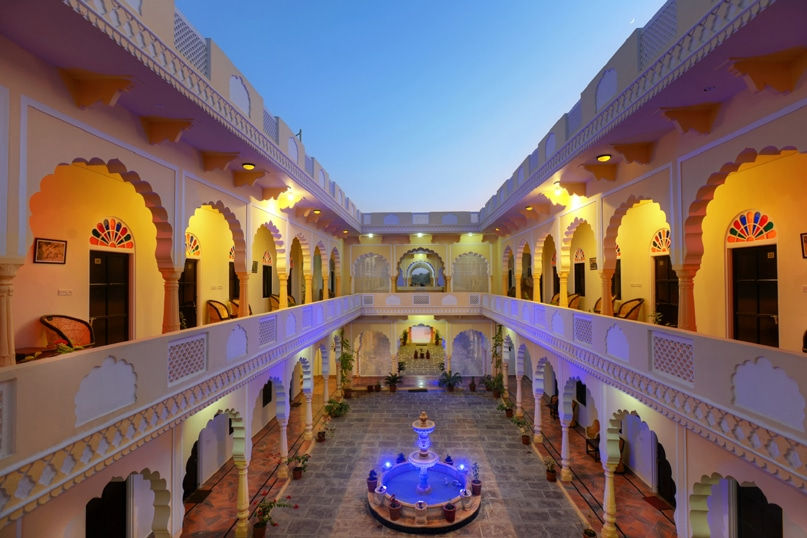
Travel by rail & Heritage stay
Varying from open-coach, curtain-lined berths to clean, air-conditioned cabins, India's overnight trains are a great way to travel long distances while immersing yourself in the local culture. Then there are the narrow gauge railways to Ootacamund and Shimla, a fun way to travel and watch the scenery go by
Or stay in the lap of luxury at the home of local landlords or former royalty, the perfect place to take a break from what can be a hectic country.
Beyond the Highlights: Discovering India’s Best Kept Secrets
Experience India’s hidden gems
This guide touches on the classic highlights that define the Indian experience. For those ready to delve even deeper, there is so much more to discover: the temples of Khajuraho, world-famous for their stunningly intricate Nagara-style architecture and celebrated erotic sculptures; the Caves of Ajanta and Ellora,

home to breathtaking ancient paintings and the monolithic Kailasa temple; and Hampi, where a surreal landscape of giant boulders cradles the magnificent ruins of the Vijayanagara Empire.
You might lose yourself in the wild beauty of Pench National Park, the original inspiration for Rudyard Kipling’s The Jungle Book, or immerse yourself in the soul of Kolkata, the intellectual and cultural heart of India. From the profound serenity of the Golden Temple in Amritsar to the hypnotic geometry of the ancient stepwells of Rajasthan and Gujarat, India’s layers are truly endless. Whether it is your first journey or your tenth, there is always another story waiting to be told—and I would love to help you write yours.
The Best Time to Visit India: Weather and Seasons Guide
Timing is one of the most important factors when planning a trip here, and it’s something I always tailor based on the regions involved.
October to March: The Most Comfortable Season
For most itineraries, this is the best window. Temperatures are more manageable, particularly in the north, making it ideal for sightseeing. It’s also the busiest time, so planning ahead is important.
April to June: Hot, but Worth Considering
It can be very warm, especially in Rajasthan and the central regions. That said, this is one of the best times for wildlife viewing, as animals are easier to spot around water sources.
It’s also when the Himalayan regions come into their own, offering cooler conditions.
June to September: Monsoon and Fewer Crowds
The monsoon changes the feel of the country entirely. Landscapes turn green, and there are far fewer travellers. It’s not the easiest time to travel, but it can be rewarding in the right areas. Interestingly, Ladakh is one of the best places to visit during this period, as it remains largely dry.
Final Thoughts: Planning India the Right Way
If there’s one piece of advice I give consistently, it’s this: don’t try to do too much. India is not a place you “complete.” It’s a place you experience in parts, over time. With the right planning, the right pacing, and a clear understanding of what you want from the trip, it becomes one of the most rewarding destinations you can visit.
After several journeys there myself, let me help you plan the best trip for you. Contact me today.
India FAQ
Do Canadians and Americans need a visa for India?
Yes. All travelers from Canada and the US must obtain a visa before arriving in India. Most tourists are eligible for an e-Visa, which can be applied for online.
Expert Tip: In addition to your visa, as of late 2025/early 2026, the Indian government has introduced a mandatory Electronic Arrival Form that must be submitted within 72 hours of landing. This is separate from your visa, and having a professional coordinator ensures you don't miss these small but critical paperwork updates.
Is India safe for first-time Western travelers?
India is generally safe for tourists, but it can be overwhelming due to the sheer scale of the crowds and the sensory input. The most common issues are petty theft or "tourist scams" in high-traffic areas.
The Benefit of a Tour: When you travel on a guided tour, you have a local expert who acts as a "buffer." They know which areas to avoid, which taxis are reputable, and how to navigate local customs safely, allowing you to relax and soak in the culture without being on high alert.
What is the best way to get around India?
While India has an extensive rail network and affordable domestic flights, navigating them independently can be a full-time job. Trains often require booking months in advance, and the chaos of local traffic in cities like Delhi or Mumbai is legendary.
Why a Tour is Superior: A private or small-group tour provides vetted, air-conditioned transport and a driver who understands the local "rules of the road." You won't have to worry about missing a train connection or haggling with rickshaw drivers; instead, you get door-to-door service that preserves your energy for sightseeing.
How can I avoid the "Delhi Belly" (food safety)?
Health is a top concern for Canadians. The rule of thumb is: "Boil it, cook it, peel it, or forget it." Stick to bottled water (even for brushing teeth) and avoid raw salads.
The Tour Advantage: Tour leaders and guides know which kitchens maintain the high hygiene standards Western stomachs require, so you can enjoy authentic biryani and local delicacies with peace of mind.
Should I plan my own trip or book a guided tour?
If it is your first time to India, a guided tour is highly recommended. Independent travel in India is rewarding but can be exhausting due to the logistical "friction."
A tour transforms a complex trip into a seamless experience. We handle the "heavy lifting"—the internal flights, the heritage hotel bookings, and the expert guides—so your 30-year dream trip doesn't get bogged down in 5-hour logistics delays.


Comments