

On my fifth polar cruise I Explored Svalbard with Aurora Expeditions—And It Exceeded Every Expectation
Updated: Jul 31

Some trips are enjoyable. Others stay with you long after you’ve unpacked your suitcase. My voyage around Svalbard with Aurora Expeditions firmly belongs in the second category. Having travelled to more than 100 countries and visited all seven continents, I’ve been fortunate enough to experience some extraordinary places, yet this journey through the High Arctic continually surprised me. Every day seemed to raise the bar just a little higher.
Departure: The Journey to Svalbard with Aurora Expedtions Begins in Oslo
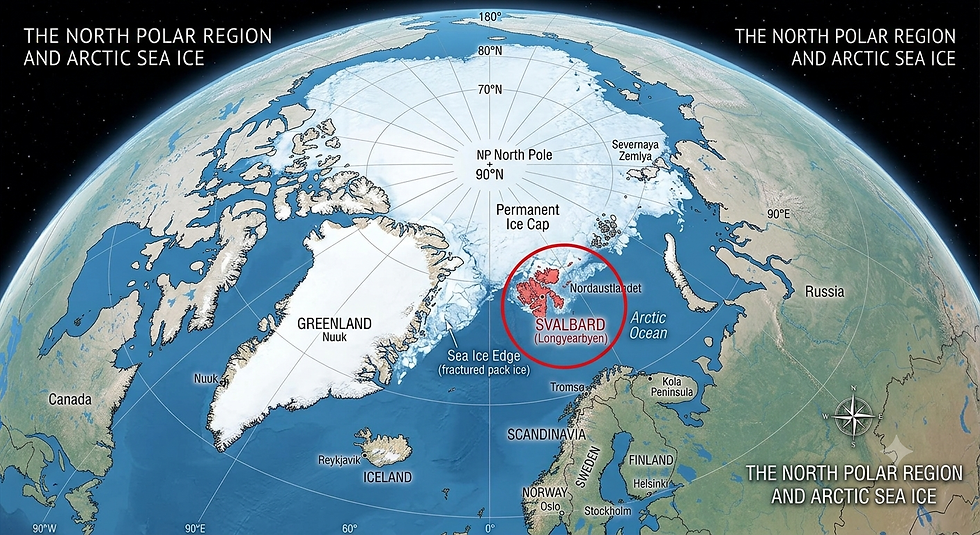
The expedition began in Oslo, where our group gathered before flying north to Longyearbyen, the world’s northernmost town with a permanent population. Even before reaching Svalbard, there was a small adventure.
At the airport, I discovered that my booking had been made under “Tom Gehrels” while my passport carries my Christian names. The check-in agent refused to issue my boarding pass because the names didn’t match. After a few anxious minutes of discussion with the Aurora staff, inspiration struck. I remembered that my business card carries both my photograph and the name Tom Gehrels. It was enough to convince everyone that I was indeed the same person, and with a smile, I was finally handed my boarding pass—possibly the first and last time ever a business card was accepted as official documentation. It was an amusing start to a trip that would soon remind me that expedition travel rarely follows a perfectly scripted plan.
Embarkation in Longyearbyen
Our flight crossed the Barents Sea beneath low cloud and occasional snow flurries before landing in Longyearbyen. The first impression was one of starkness. Snow-covered mountains rose straight from the water, while the settlement appeared surprisingly substantial for such a remote outpost.
A brief visit to the excellent Svalbard Museum whetted my appetite, but our ship was waiting. After a short Zodiac transfer through chilly Arctic waters, I stepped aboard what would become my home for the next two weeks: the custom-built polar exploration vessel Sylvia Earle. My cabin was compact but thoughtfully designed, with a comfortable bed, plenty of storage, and a balcony overlooking the Arctic Ocean. After mandatory safety briefings and a lifeboat drill, we quietly slipped out of Isfjorden and headed north into the wilderness. On board were 78 intrepid travellers, mostly from English-speaking countries, many of them on their second or third polar cruise. (Having previously been to the Canadian Arctic, Greenland, South Georgia and Antarctica, for me it was my 5th polar cruise).
Days 1–3: Glaciers, Tundra Hikes, and Arctic Silence
The following morning, I woke at 5:30 to a view that immediately reminds you why you’ve travelled so far: rugged snow-covered mountains rising from calm waters, with the blue face of Lilliehöök glacier ahead. The observation lounge at the bow quickly became my favourite spot on the ship, featuring floor-to-ceiling windows and an outdoor deck to take in the crisp air. Before stepping ashore, we attended a polar bear safety briefing—an ever-present consideration requiring armed guides for every landing.

Our first excursion was a Zodiac cruise beneath the enormous ice walls surrounding Lilliehöökbreen with Expedition Leader Rune, a towering Norwegian whose calm confidence set the tone. Deep crevasses glowed with impossible shades of blue while a bearded seal lounged comfortably on ice floes, unconcerned by our presence. Northern Fulmars and Black-legged Kittiwakes glided overhead, joined by a rare Ivory Gull.
Signehamna and Bruceneset Hikes
Aurora offered multiple activity levels for landings, and I opted for the longest hikes whenever possible. At Signehamna, Rune led our small group steadily uphill across boulder fields and loose rocks. Though summer had just arrived, mosses and early Arctic flowers clung stubbornly to the terrain. Standing high above the bay in warm sunshine, surrounded by wilderness, I felt wonderfully insignificant.
Back aboard, I established a favourite daily ritual: sweating in the glass-fronted sauna before stepping directly onto the open deck in a towel to cool down naturally in the frigid air.
The next morning brought another landing at Bruceneset. Hikers split up, and our group pressed up broad snowfields that made walking surprisingly easy. As we climbed, the ship turned into a tiny white speck against massive mountains.

"The landscape was so immense that no camera lens could properly convey the scale—people became tiny dots, mountains seemed endless, and distances were impossible to judge."
Unique in Svalbard with Aurora Expeditions: The "Shackleton Slide" & Finding Silence
During our descent from Bruceneset, I jokingly suggested to Rune that we attempt a “Shackleton Slide”—referencing Sir Ernest Shackleton’s slide down South Georgia’s snow slopes. Rune embraced the idea immediately. The first few hikers carved a track, and then we all launched ourselves downhill on our backsides, laughing all the way (naturally I had to do it twice!).
Shortly after, I suggested a different exercise: total silence. We stopped walking, talking, and taking photos for several minutes. Absolute quiet settled around us. There were no aircraft, no traffic, nor machinery—only the faintest whisper of wind across the snow. It was a peaceful silence that highlighted just how noisy everyday life can be.
Citizen Science at Hamiltonbukta
Later that day, near Hamiltonbukta, I participated in Aurora’s citizen science program, lowering a Secchi disc into the ocean to measure water clarity and plankton levels for a long-term climate dataset.
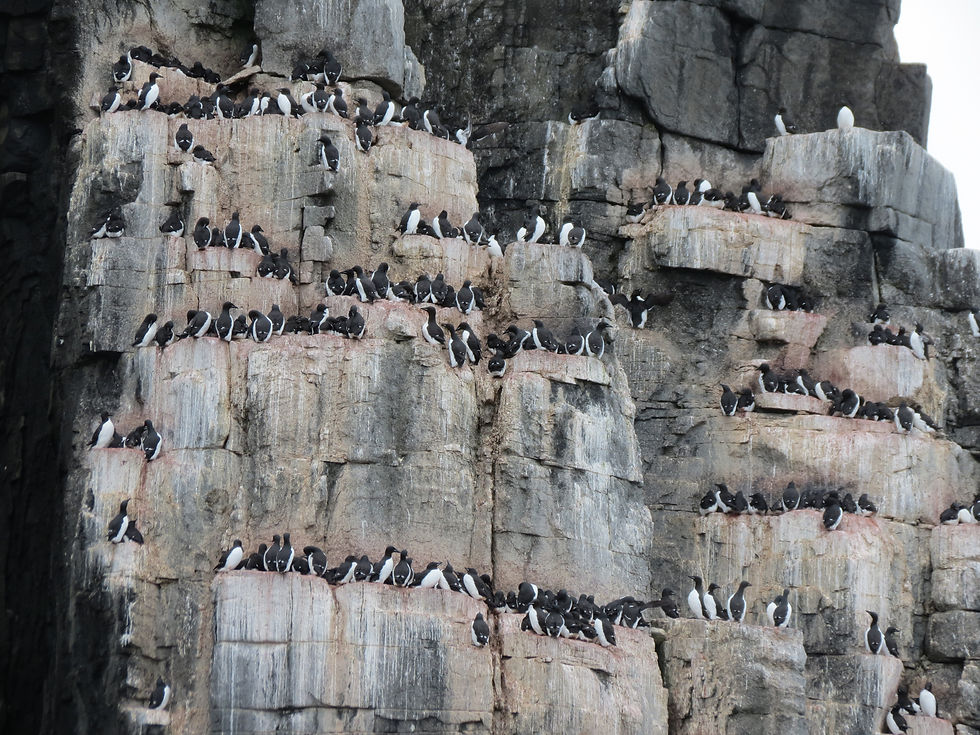
We then cruised toward bird cliffs teeming with thousands of kittiwakes and guillemots nesting high out of reach of Arctic foxes, before spotting a ringed seal resting on a rock.
Our final stop of the day was the historic cabin of "Stockholm Sven," a trapper who chose a solitary life in the High Arctic after suffering severe facial injuries, adding a striking human element to the barren setting. That evening, as we passed Moffen Island, hundreds of walruses were spotted hauled out together on the gravel spit, shifting lazily in massive piles.

Days 4–6: Pushing North to the Ocean Pack Ice
By the fifth day, we were well north of Svalbard's main islands. Our morning landing was at Chermsideøya under moody skies. Near the shore, guides pointed out historic stone "graffiti"—names and symbols left behind by early Norwegian trappers, Soviet explorers, and even by Nazi soldiers in WW2.
At Phippsøya we hiked inland across endless boulder slopes, while our polar bear scout stayed far ahead with a rifle, checking behind ridges and terrain features. It was another terrifc hike in this beautiful landscape. We tackled a strenuous trek across waist-high boulder fields before taking another moment to sit silently behind rocks. Glancing up, I caught sight of a quick Arctic fox bounded between the stones, its coat transitioning from winter white to summer charcoal.

Entering the Ice Pack and the Polar Bear Encounter
The next day, the ship slowly pushed north toward 81.5 degrees latitude, leaving mountains behind and entering a vast world of floating sea ice stretching toward the North Pole. Time seemed to slow as everyone scanned the frozen expanse with binoculars. Hours passed with only distant seals and belugas until the announcement echoed over the speakers:
"Polar bear."
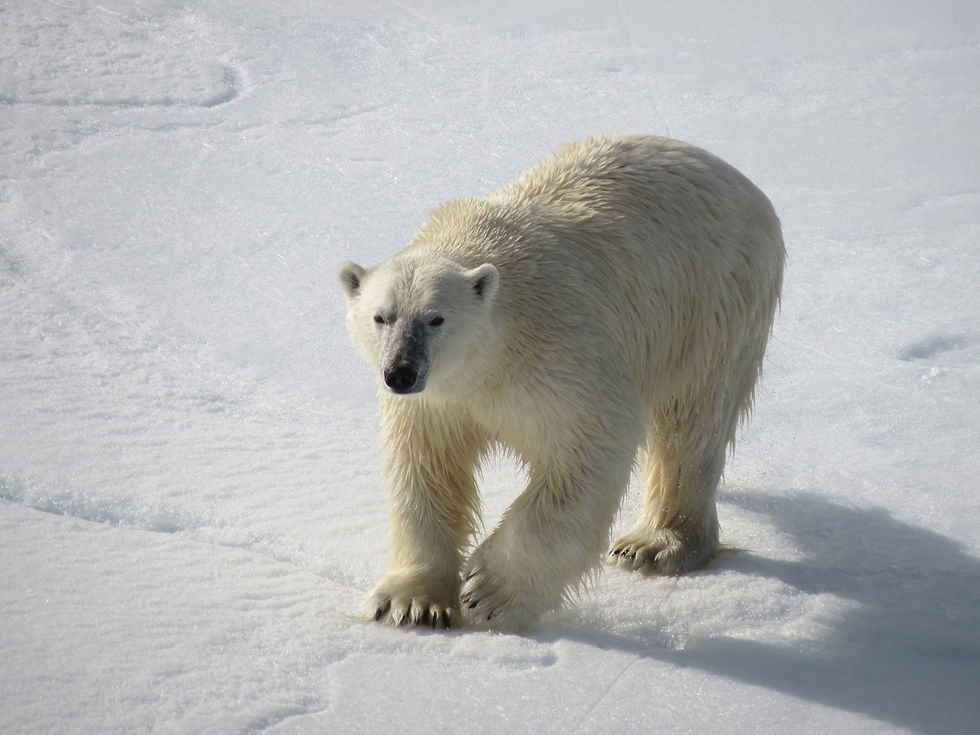
A cream-coloured speck appeared in the distance, weaving between pressure ridges before slipping into an open lead of water. This bear was curious - it had smelled us and came over to investigate. Noticing its trajectory, I quietly positioned myself on an empty side deck overlooking a large ice floe right next to the ship. A few minutes later, the bear hauled itself onto the ice just meters away, dripping wet and completely majestic.
Days 7–10: Seabird Cities, Walrus Haul-Outs, and Polar Plunge
The following afternoon, we boarded Zodiacs to step out directly onto a stable ice floe in the middle of the Arctic Ocean—hundreds of kilometers from permanent settlement. Standing on the frozen sea under the polar sun was surreal.

Heading back south, our first stop was Alkafjellet, home to one of Svalbard's largest seabird colonies. Towering cliffs rose dramatically out of the sea, packed with thousands of Brünnich’s Guillemots and Black-legged Kittiwakes, while Glaucous Gulls circled for eggs. The sensory overload of sound and movement was incredible.
That afternoon brought a rare sighting of a bowhead whale in the distance—a species hunted nearly to extinction.
Later, I joined the traditional Polar Plunge, jumping into 4°C water before dashing straight into the sauna to thaw out.
By evening, we landed at Torellneset, getting an uninterrupted ten minutes to watch a herd of walruses grunting and jostling on a gravel spit before dense fog rolled in, forcing a fast Zodiac retreat to the ship for safety.
Foggy Cruising and the Sunlit Valleys of Sundneset
Heavy fog the next morning turned a planned hike at Kapp Lee into a misty Zodiac cruise around another group of wallowing walruses. By afternoon, however, the fog cleared at Sundneset, revealing bright sunshine over a valley filled with quiet lakes, long-tailed ducks, Arctic poppies, and grazing reindeer.
We walked past 10,000-year-old whale bones resting on the tundra before sitting quietly on a rocky hill to listen to distant waterfalls and bird calls. I became so absorbed in the silence that I lost track of time and had to catch up to the group. The Zodiac ride back was an adventure in itself, as our driver, Sergey, playfully zipped around the bay and carved sharp turns in front of the ship’s hull.

Days 11–15: Arctic Fox Den, Alpine Ridges, and Final Reflections
The second week continued to deliver unexpected moments. At Bamsebu, surrounded by beluga bones left behind by early 20th-century hunters, we spotted a sleeping Arctic fox. The wind kept our scent hidden, allowing us to watch it wake up and curl up by another rock. Nearby, curious Svalbard reindeer wandered close to investigate us.
Later, in Samarinvågen, we drifted near the face of Samarinbreen glacier, listening to the ice crack, boom, and groan as it shifted under its immense weight.
Playful Fox Kits at Gnålodden
The wildlife highlight of the trip came near Gnålodden, next to an old trapping cabin once run by a solitary female trapper. Below a towering bird cliff, we found an active Arctic fox den. For nearly twenty minutes, we watched tiny fox kits bound out from the rocks, wrestling, tumbling, and chasing each other completely unbothered by our presence.

The day ended with a festive barbecue on the ship's outer deck under the midnight sun, complete with music, dancing, and great food. The next morning, a massive pod of beluga whales surfaced right alongside the ship, their smooth white backs breaking the water as we watched from the observation deck.

The Peak Hike at Konowbreen
At Poolepynten, we enjoyed a flat beach walk among snoring walruses and Russian driftwood. The afternoon hike at Konowbreen was the most challenging—and rewarding—hike of the expedition. We climbed straight up from the beach along a narrow ridge with drop-offs on both sides. From the top, we were treated to an incredible view: two separate glaciers flowing into different arms of a sweeping fjord, surrounded by snow-capped peaks. It was easily one of the most breathtaking viewpoints I have ever stood on.

Returning to Longyearbyen
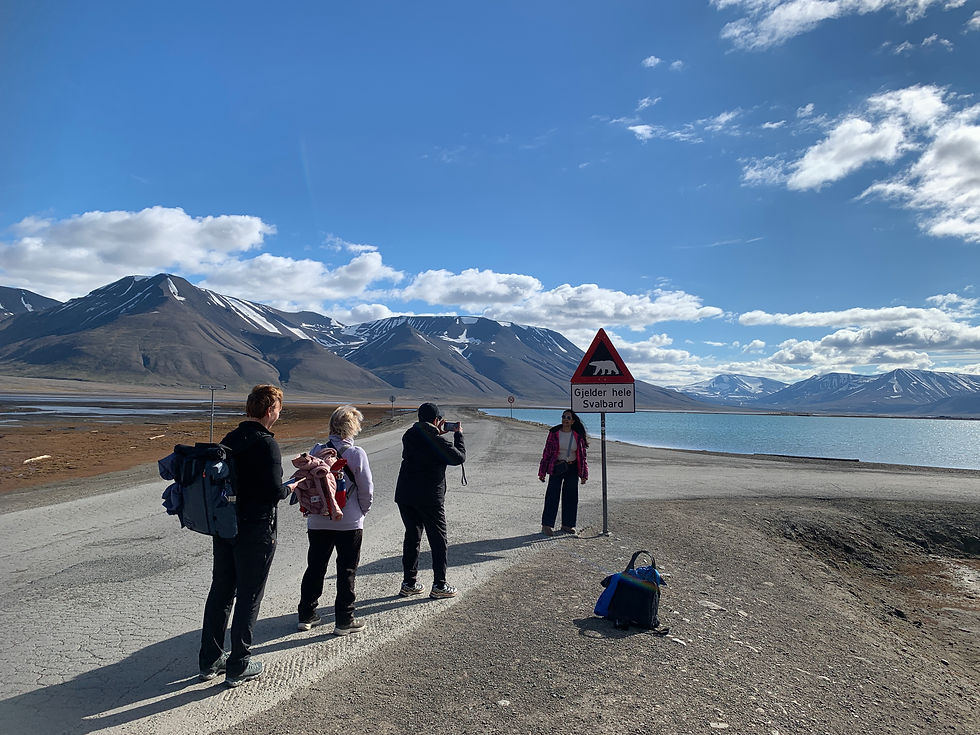
Our final full day included another stop to watch young fox kits play among the rocks, followed by an evening slideshow capturing our two-week voyage. Back in Longyearbyen, I walked out to the famous polar bear warning sign at the edge of town—a fitting place to reflect before heading to the airport.
I’ve travelled extensively, but this voyage around Svalbard sits comfortably near the top of my list. Aurora Expeditions combined expert leadership, skilled guides, excellent food, and total flexibility to showcase the very best of the High Arctic. Expedition travel isn't about rigid schedules—it’s about slowing down, embracing unpredictability, and letting nature dictate the adventure.
After fifteen days, I left with thousands of photos, lifelong memories, and one clear feeling: I wasn't ready to leave, and I’ll definitely be back.
Over to you
If you are interested in this unique polar adventure, please contact me to get the conversation started,
The official slideshow
Aurora Expeditions produced an offical slideshow of this journey which I recommend you watch if you are interested in travelling to Svalbard. You can watch it below.


Comments