

South America Travel Guide: Top Highlights and Best Regional Experiences

South America is a continent that rewards curiosity. It is not defined by a single landmark, but by a remarkable range of landscapes and cultures that shift as you move from north to south. From Caribbean coastlines to Andean peaks, and from dense rainforest to glacial valleys, each region offers something distinct for the intrepid traveller.
What follows is a geographically logical overview of South America’s highlights—places that consistently stand out for their visual appeal, cultural depth, and the unique experiences they offer.
This South America Travel Guide covers the 10 must-see regions of South America, from the colonial streets of Cartagena to the glaciers of Patagonia, including seasonal advice for the Amazon and Salar de Uyuni.
South America Highlights at a Glance
Destination | Primary Appeal | Best For... | Best Time to Go |
Cartagena | Colonial History | Culture & Foodies | December to March (Dry season) |
Galápagos | Unique Wildlife | Nature Lovers | Year-round; Dec–May is warmer |
Amazon Basin | Biodiversity | Adventure Seekers | All Year; seasonal experiences |
Machu Picchu | Inca Archaeology | History & Hiking | May to October (Dry season) |
Lake Titicaca | Indigenous Traditions | Cultural Immersion | May to October (Clear skies) |
Salar de Uyuni | Surreal Vistas | Photographers | Jan–March for "Mirror"; May–Oct for "Salt" |
Atacama Desert | Stargazing | Solitude & Science | Year-round; Sept–Nov is mildest |
Torres del Paine | Wilderness | Trekkers | November to March |
Buenos Aires | Urban Sophistication | Nightlife & Tango | March–May or September–November |
Iguassu Falls | Natural Power | Sightseeing | March to June (High water, lower heat) |
Rio de Janeiro | Coastal Energy | Festivals & Beaches | December to March (Summer & Carnival) |

1. Colombia: Caribbean Culture and Colonial History
Cartagena and the Northern Coast
On Colombia’s Caribbean coast, Cartagena offers one of the most atmospheric introductions to the continent. Its walled old town—a UNESCO World Heritage site—reflects centuries of Spanish colonial influence, featuring beautifully restored buildings, shaded courtyards, and lively plazas.
Beyond the architecture, Cartagena is defined by its energy. Street musicians, local food vendors, and the rhythm of daily life give the city a sense of movement. It is an accessible starting point for understanding the cultural layering that runs throughout the northern region.

2. Ecuador: Wildlife and Volcanic Landscapes
The Galápagos Islands
Located 1,000 kilometres off the coast of Ecuador, the Galápagos Islands provide a world-class wildlife experience. The islands’ isolation has allowed species to evolve with little fear of humans, creating opportunities for close observation.
Key Activities: Snorkelling with sea lions, observing marine iguanas, and walking alongside giant tortoises.
The Landscape: Volcanic and rugged, the terrain reinforces the sense of being in a prehistoric world shaped by raw natural forces.
Pro Tip: Give yourself a minimum of ten days for a Galapagos trip. The first two and last two days are travel days, so a ten day trip gives you six full days in the islands.

3. The Amazon Basin: Biodiversity and Immersion
The Amazon Rainforest
Spanning nine countries, the Amazon Rainforest is the most biodiverse ecosystem on the planet. Visiting the Amazon is less about traditional "sightseeing" and more about total immersion.
Guided walks and river journeys allow you to experience the forest’s layers. The density of life is striking; the humidity and the constant chorus of wildlife create an environment that feels entirely separate from the rest of the world.
Pro Tip: Timing Your Amazon Cruise
The Amazon experience is dictated by the river’s pulse, not the calendar. Choosing when to go depends on your travel style:
High Water (December – May): Best for skiff exploration. The river rises up to 10 metres, allowing you to boat deep into the flooded forest and get eye-level with sloths, monkeys, and birds in the canopy.
Low Water (June – November): Best for active trekking. As the water recedes, jungle trails and sandy riverbanks reappear, making it the prime season for hiking, spotting caimans at the water's edge, and piranha fishing.
4. Peru: The Andes and Inca Legacy
Machu Picchu and the Sacred Valley
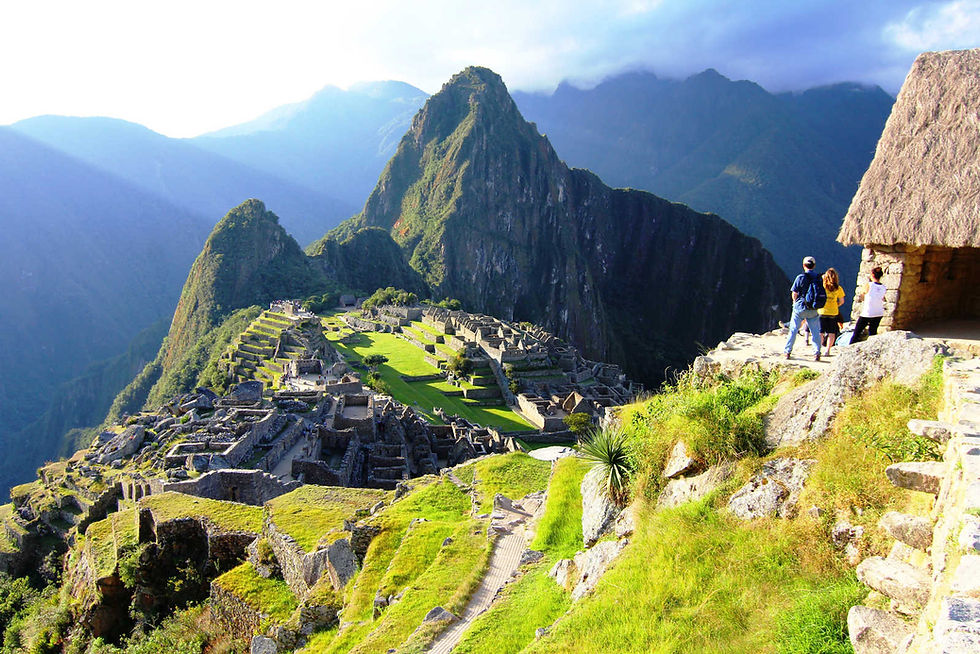
In Peru, the Andes Mountains are the heart of the travel experience. Machu Picchu remains one of the most significant archaeological sites globally, celebrated for its incredible preservation and dramatic clifftop setting. Of course hiking the Inca Trail is a must for many, whereas others prefer to take the train.
Surrounded by steep peaks and accessed through the Sacred Valley, Machu Picchu reflects the advanced engineering and cosmology of the Inca civilization. It offers a profound look at how ancient cultures adapted to high-altitude environments.
Pro tip: if you are a couple and one of you wishes to hike the Inca Trail and the other prefers to take the train to Machu Picchu, contact me for options.

5. Peru and Bolivia: The High Altiplano
Lake Titicaca
Straddling the border between Peru and Bolivia, Lake Titicaca is the highest navigable lake in the world and a site of immense spiritual significance. According to Andean mythology, this deep blue expanse was the birthplace of the sun and the first Inca kings.
The lake is best known for its unique cultural landscapes, particularly the Uros Floating Islands, which are constructed entirely from buoyant totora reeds. A visit here offers a glimpse into a lifestyle defined by the water, where traditional weaving and fishing remain central to the local economy. Whether you are exploring the terraced hills of Isla del Sol on the Bolivian side or the vibrant markets of Puno in Peru, the lake provides a tranquil, high-altitude pause between the rugged Andes and the salt flats further south.
6. Bolivia: High-Altitude Landscapes

Salar de Uyuni
Further south, Bolivia offers some of the continent’s most surreal scenery. The Salar de Uyuni is the largest salt flat in the world. Depending on the season, it appears as a vast, white hexagonal expanse or a giant reflective mirror after a rain. Travelling across Uyuni emphasizes scale and isolation, where the horizon seems to disappear entirely.

Pro Tip: The Two Faces of Salar de Uyuni
Choosing when to visit the world’s largest salt flat depends entirely on which "version" of the landscape you want to photograph:
The Mirror Effect (January – March): During the rainy season, a thin layer of water transforms the flats into the world’s largest natural mirror. This creates those iconic, mind-bending photos where the sky and ground become indistinguishable. Note: Some areas may be inaccessible due to deep water.
The Crystal Tundra (May – October): In the dry season, the water evaporates to reveal a vast, blindingly white expanse of geometric salt crusts. This is the best time for "perspective-play" photography and offers full access to remote spots like Incahuasi Island (the cactus island).

7. Chile: Deserts and Pacific Mysteries
The Atacama Desert
In northern Chile, the Atacama Desert—the driest non-polar place on Earth—features salt flats, geothermal fields, and high-altitude lagoons. The lack of moisture creates the clearest night skies in the world, making it a global centre for astronomy.

Easter Island (Rapa Nui)
Isolated in the Pacific Ocean, Easter Island stands apart. Famous for its mysterious Moai statues, the island offers a reflective, windswept experience. It is a destination that balances archaeological intrigue with a sense of total geographical detachment.

8. Patagonia: Southern Wilderness
Torres del Paine National Park
In southern Chile, Torres del Paine represents Patagonia at its most iconic. Granite peaks, bright blue glacial lakes, and golden plains define the landscape. While it is a mecca for hikers, the sheer scale of the terrain is visible even from the roadside, though the unpredictable weather reminds every traveller of nature's power.
9. Argentina: Urban Culture and Natural Wonders
Buenos Aires
In Buenos Aires, the focus shifts to urban sophistication. The city’s European influence is evident in its grand boulevards and café culture, yet its soul is purely Argentine—defined by the passion of tango and a world-renowned culinary scene.
Iguassu Falls
On the border of Argentina and Brazil, Iguassu Falls is a breathtaking display of raw power. This system of 275 individual waterfalls stretches across nearly three kilometres, surrounded by lush subtropical rainforest.
10. Brazil: Coastal Energy and Iconic Vistas

Rio de Janeiro
In Rio de Janeiro, the rainforest meets the city. Framed by iconic mountains and famous beaches like Copacabana, Rio’s geography is unmistakable. The city’s appeal lies in its outward-facing atmosphere, from its vibrant music scene to its world-famous festivals.
Why South America Stands Out
Diversity Across Regions
The sheer range of experiences available within a single continent is staggering. Tropical coastlines, high-altitude deserts, wildlife havens, and polar-influenced plains all exist within reachable distances. Each destination offers a different perspective—be it ecological, historical, or cultural.
Complementary Experiences
The magic of a South American itinerary lies in the contrast. The stark, arid beauty of the Atacama perfectly balances the lush humidity of the Amazon. The ancient ruins of Peru provide a historical counterpoint to the modern energy of Brazil.

South America's World-Class Infrastructure
In major hubs like Santiago, Buenos Aires, and Medellín, you will find modern transit systems, high-speed internet, and healthcare facilities that meet or exceed Western standards. For many travellers, the "culture shock" is far less intense than expected due to the familiar urban layouts and cosmopolitan lifestyles.
South America's Professionalized Tourism Sector
From luxury lodges in the Amazon to boutique "estancias" in the Pampas, the hospitality industry here is exceptionally well-regulated. Guides are often highly trained professionals with degrees in biology or history, ensuring that even remote expeditions are conducted with a focus on both safety and education.
Navigating South America Safely
While "standard urban caution" is necessary—just as it would be in Paris or New York—the continent is increasingly geared toward the safety of international visitors. By booking on tours, staying in vetted neighbourhoods, and following the advice of local experts and tour guides, travellers can navigate the continent with confidence.
South America Travel Guide - Final Thoughts
South America’s highlights are defined by the interplay between its regions. From the colonial streets of Cartagena to the remote glaciers of Patagonia, approaching the continent geographically helps make sense of its immense scale. For travellers planning their next adventure, these regions offer the most rewarding and memorable journeys in the Southern Hemisphere.
Ready to turn these highlights into your next itinerary?
Don’t let the scale of South America overwhelm your planning. Contact me today to either find the perfect small-group tour, or to start crafting a custom, seamless journey through the continent’s most iconic regions.
Frequently Asked Questions: Planning Your South American Adventure
When is the best time of year to visit South America?
Because the continent is so vast, the "best" time depends on your specific destination. Refer to the table at the top of this post.

Do I need a visa to travel to South America?
Visa requirements vary by your nationality and the specific country you are visiting. As of 2026 Canadian and US Citizens: Most countries allow visa-free entry for tourism. However, Brazil requires an e-visa for Canadian and US travellers. They can obtain an e-visa before departure at https://brazil.vfsevisa.com/. They must have a printed confirmation of an approved e-visa which reads 'eVisa Federative Republic of Brazil' in the middle top of the page. It is recommended to print two copies of the approved e-visa.
Pro tip: Check Requirements: Always verify the latest entry rules on the official government website of your destination at least one month before departure.
Is it safe to travel across the continent?
South America is generally safe for travellers who exercise "standard urban caution."
Stay Informed: Stick to well-traveled areas and avoid walking alone at night in large cities like Bogotá or Rio de Janeiro.
Transport: Book a tour. If travelling independently, use reputable ride-sharing apps (like Uber or Cabify) rather than hailing street taxis in unfamiliar areas.
Valuables: Keep expensive jewellery and large amounts of cash out of sight. A "decoy wallet" is a common tip for city travellers.
Can I drink the tap water?
In most South American countries, it is recommended to stick to bottled or filtered water.
Exceptions: Tap water is generally considered safe to drink in major urban centres in Chile and Uruguay.
Pro Tip: To reduce plastic waste, consider travelling with a reusable water bottle that has a built-in purification filter.

What currency should I bring?
Each country has its own currency (e.g., the Argentine Peso, the Brazilian Real).
US Dollars: It is highly recommended to carry some crisp, clean US dollar bills. They are widely accepted for large purchases and can be easily exchanged if ATMs are unavailable.
Credit Cards: Visa and Mastercard are widely accepted in cities, but carry cash for rural areas, local markets, and small tipping.
Pro Tip: our predeparture information is tailored for each tour and destination and will give you all the information you need on currency, passport and visa requirements, what to pack and a host of other topics.

Do I need any specific vaccinations?
Yellow Fever is the most commonly discussed vaccination, especially if you are visiting the Amazon or rural parts of Brazil and Colombia. Some countries may require proof of a Yellow Fever certificate if you are arriving from an endemic area. Consult a travel clinic at least six weeks before you depart.
Why is Angel Falls in Venezuela not included in this guide?
While Angel Falls is an undisputed natural wonder—dropping nearly a kilometre from a "tepui" tabletop mountain—it is currently omitted for safety and logistical reasons.
As of April 2026, Global Affairs Canada maintains an "Avoid All Travel" advisory for Venezuela. The country continues to face significant challenges, including security risks, frequent shortages of electricity, water, and fuel and limited consular support.


Comments