

Sri Lanka is An Adventure for the Curious Traveller

There are destinations you visit to relax, destinations you visit for their history, and destinations you visit for their wildlife. Then there are places that seem to offer all of them at once.
Sri Lanka is one of those places.
For the curious traveller, this small island in the Indian Ocean offers an extraordinary variety of experiences. Ancient Buddhist cities stand amid forests. Hindu temples sit beside busy streets and colourful markets. Tea plantations cover the mountainsides. Elephants wander through national parks. Colonial architecture survives in old trading towns. Fishermen work along the coast, while restaurants and family kitchens serve curries, seafood, hoppers and other dishes that reflect centuries of cultural influences.
And then there are the people.
Sri Lanka is a destination where travel is as much about experiencing another culture as seeing its famous sights. You can explore ancient ruins, visit temples, learn how tea is produced, eat a meal in a local home, travel through the mountains by train, watch a cricket match, search for leopards, cycle the backroads and hike the mountains, wander through a colonial fort or simply sit beside the Indian Ocean.
Here's why Sri Lanka is an adventure for the curious traveller.

Colombo: Your Introduction to Sri Lanka
Many journeys begin in Colombo, and it is worth giving the capital more than a quick overnight stop.
Colombo can initially seem chaotic. It is busy, sprawling and energetic, but spend some time exploring and its character begins to emerge.
This is a city where Sri Lanka's different influences are visible almost everywhere. Buddhist shrines, Hindu temples, Christian churches and mosques exist alongside colonial buildings, modern hotels, markets and contemporary restaurants.
The Pettah district is particularly interesting for travellers who enjoy getting a feel for everyday life. Its crowded markets and busy streets are a world away from the polished environment of an international hotel.
The Fort district provides another side of Colombo, with colonial architecture being restored alongside modern cafés, galleries and restaurants.
And then there is the food. Colombo is a good place to begin discovering Sri Lankan cuisine, from street food and market snacks to sophisticated restaurants. Sri Lankan cooking reflects the island's history, incorporating influences from South India, the Portuguese, Dutch, Malays, Arabs and British.
For a curious traveller, Colombo is not merely a gateway to Sri Lanka. It is the first opportunity to start understanding the country.

Sigiriya: An Ancient Kingdom in the Jungle
If there is one image that has come to symbolize Sri Lanka, it is probably Sigiriya.
A huge granite outcrop rises approximately 200 metres above the surrounding landscape. At its summit are the remains of an ancient capital, while the gardens, moats and archaeological remains below provide clues to the extraordinary civilization that once occupied the site.
Yes, reaching the top involves a climb, but you don't need to be a serious hiker to appreciate Sigiriya. The physical effort is simply part of the experience.
The real attraction is imagining what this place must have been like when it was a functioning royal centre.
Go early in the morning if possible. Mist rising from the surrounding forest gives the landscape an almost surreal quality, and the cooler temperatures make the ascent more comfortable.
For travellers interested in history, archaeology, architecture or simply spectacular landscapes, Sigiriya is one of the best places to visit in Sri Lanka.

Dambulla: Art, Religion and Living History
Not far from Sigiriya is the Dambulla Cave Temple, one of Sri Lanka's most remarkable religious sites.
Five caves contain hundreds of Buddha images and elaborate murals. But what makes Dambulla especially interesting is that it is not simply an archaeological attraction. It remains an active place of worship.
That distinction is important when travelling through Sri Lanka. The country's religious sites are not simply monuments from the past. Buddhism, Hinduism, Islam and Christianity are all part of contemporary Sri Lankan life, and temples and shrines remain places where people come to pray, make offerings and celebrate important occasions.
For visitors, that creates an opportunity to observe a living culture rather than simply look at historical artefacts.

Anuradhapura: Sri Lanka's Ancient Heart
If you enjoy history, Anuradhapura deserves considerable time. For more than a thousand years, it was one of the great cities of the ancient world. Enormous stupas, ancient monasteries and temples are scattered across a vast archaeological landscape. Some of the religious sites are still active, giving the ancient city an unusual sense of continuity.
This is one of the places where Sri Lanka's long history becomes tangible. You aren't simply looking at a ruined city. You are seeing a place that remains important to people today.
The scale is impressive, but so are the small details: devotees making offerings, monks moving between temples, pilgrims praying and people gathering beneath enormous trees.
For travellers who want to understand Sri Lanka rather than simply photograph it, Anuradhapura is essential.

Polonnaruwa: A Medieval City Lost to the Jungle
The ancient city of Polonnaruwa offers another fascinating glimpse into Sri Lanka's past.
Around 800 years ago, it was an important commercial and religious centre and one of South Asia's major urban settlements. Eventually the city was abandoned and reclaimed by the jungle, remaining largely unknown for centuries.
Today, the extensive ruins include temples, statues and other structures that provide a remarkable impression of the city that once stood here.
One of the pleasures of visiting Polonnaruwa is that you can explore it at a relatively leisurely pace. Walking or cycling between the ruins allows you to appreciate the scale of the site and the surrounding landscape.
Cycling is an option here, not a requirement — and that is a good example of the way activities fit into a Sri Lankan journey. They are simply another way of getting closer to the places you are visiting.

Kandy: The Cultural Capital
Surrounded by green hills and centred around a lake, Kandy has a very different atmosphere from Colombo. It was the last capital of the historic Sinhalese kingdom and remains one of the country's most important cultural centres.
The most important attraction is the Temple of the Tooth, which houses one of Buddhism's most sacred relics. But Kandy is about much more than the temple.
Explore its streets and markets. Listen to traditional music. Watch dancers perform. Visit the botanical gardens. Sit beside the lake.
Kandy is also an excellent place to appreciate the importance of Buddhism in Sri Lankan society. For travellers interested in culture, religion and history, this is one of the country's essential stops.

Sri Lanka's Hill Country: Tea, Mountains and Cooler Air
Then the landscape changes. The Hill Country is cooler and greener than the tropical lowlands. Mountains rise through forests and tea plantations, while waterfalls tumble down hillsides and clouds often gather around the peaks. This is the Sri Lanka many visitors picture when they think of the country's famous tea.
A visit to a tea plantation or factory offers more than a pleasant walk through beautiful scenery. It provides an opportunity to understand an industry that has played an enormous role in Sri Lanka's modern history and economy. You can meet tea workers, see how leaves are processed and, naturally, drink the finished product.
The hill country is also where one of Sri Lanka's most memorable journeys takes place.

The Train to Ella: Let the Journey Be the Experience
Travelling by train through Sri Lanka's mountains is one of those experiences that sounds simple until you actually do it. The railway winds through tea plantations, forests and mountain scenery, with views changing constantly as the train climbs and descends through the highlands. The journey towards Ella has become famous, and for good reason.
But don't treat it simply as transportation between two destinations. Sit back and watch Sri Lanka pass by the window. Watch the scenery change. Notice the stations and the passengers. Buy something from a vendor when the train stops. Travel is often at its best when the journey itself becomes part of the experience.
Ella and the Central Highlands
Ella has become one of Sri Lanka's best-known mountain destinations, but its appeal goes beyond its scenery. The surrounding area offers opportunities to walk through tea country, visit waterfalls and viewpoints, and explore the landscape at a leisurely pace.
For travellers who enjoy being active, there are hikes available. Those who prefer a slower pace can simply enjoy the scenery, visit a tea estate or take in the views. This is another reason Sri Lanka works for such a broad range of travellers: you can choose how actively you want to experience it.
Adam's Peak: A Journey of Faith
Adam's Peak is one of the country's most interesting experiences because the destination is inseparable from the journey. The mountain is sacred to several religious traditions and has attracted pilgrims for more than a thousand years. During the pilgrimage season, people climb the mountain during the night, often arriving at the summit in time for sunrise.
For some travellers, the appeal will be the physical challenge. For others, it will be the opportunity to witness an important religious tradition.

Yala National Park: Sri Lanka's Wild Side
Sri Lanka's cultural richness is matched by its wildlife and a safari is one of the great experiences to include in a Sri Lankan itinerary.. Yala National Park is particularly famous for its leopard population and is considered one of the world's better places to look for these elusive cats. The park's dry forests, grasslands, lagoons and rocky outcrops also support elephants, water buffalo, crocodiles and an impressive variety of birds.
The adventure is in not knowing what you are going to see. One morning might produce elephants and colourful birds. Another could bring a leopard sighting. Sometimes the most memorable experience is simply watching a herd of animals interact in their natural environment.

Galle: Sri Lanka's Colonial Past
On the southern coast, Galle provides yet another change of pace. The centrepiece is Galle Fort, the old Dutch quarter surrounded on three sides by the Indian Ocean.
Inside the walls, colonial houses, churches, mosques, boutiques, cafés and businesses occupy what is still a functioning community.
This is a place to explore without a checklist. Walk along the ramparts. Wander down side streets. Look at the old houses and their verandas. Stop for coffee. Browse a shop. Find a restaurant. Galle demonstrates one of Sri Lanka's greatest strengths: its history is not confined to museums. It is incorporated into ordinary life.
Jaffna and Northern Sri Lanka: A Different Side of the Island
If you want to go beyond the classic Sri Lankan itinerary, consider travelling north.
Jaffna offers a distinctly different cultural experience, shaped by the island's Tamil population and Hindu traditions. The city, its temples, markets, food and surrounding islands provide an opportunity to see a side of Sri Lanka that many first-time visitors never encounter. Delft Island is a particularly intriguing destination, with its remote setting, distinctive landscape and wild ponies.
For the traveller who wants to understand how different communities have shaped Sri Lanka, the north is well worth considering.

Sri Lanka's Food: An Adventure in Its Own Right
You could travel to Sri Lanka simply for the food. The country's cuisine reflects its complicated history. South Indian, Malay, Arab, Portuguese, Dutch and British influences have all contributed to what we now recognize as Sri Lankan food.
And there is far more to it than curry. Try kottu roti, where chopped flatbread is cooked with vegetables, meat or seafood. Sample hoppers, vadai, sambals and fresh seafood. Eat rice and curry with your hands, as many Sri Lankans do.
Better still, go beyond restaurants. Visit a local market. Take a cooking class. Eat with a family. Learn how spices are combined. Ask what you are eating.
A food-focused itinerary can turn an ordinary meal into a cultural experience. A good tour includes market visits, cooking experiences and meals with local families.
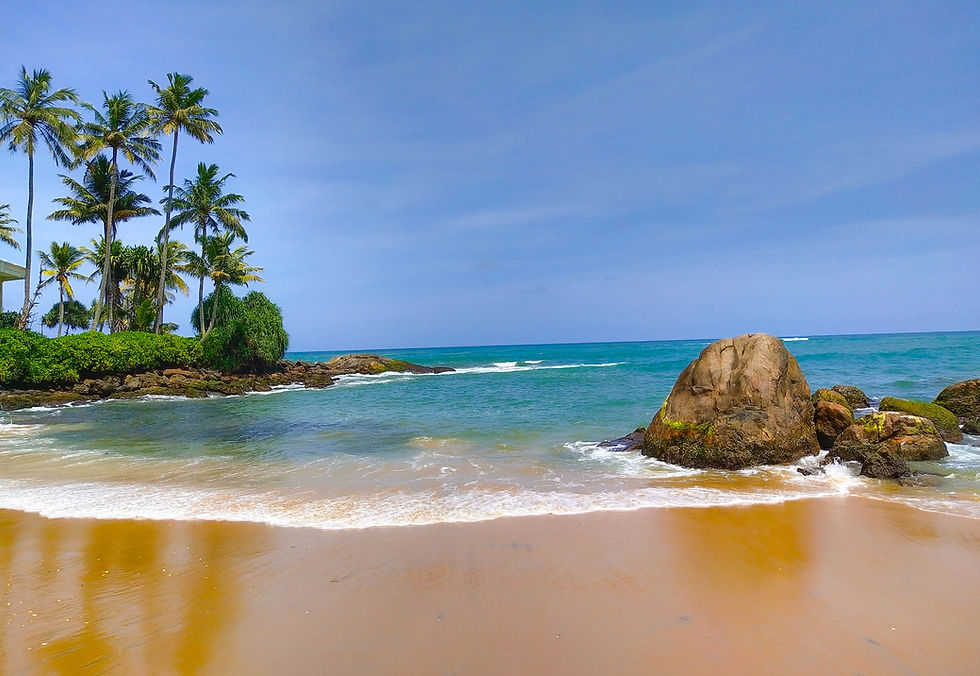
The Beaches: End Your Journey Slowly
After travelling around the country, you may want to do absolutely nothing for a few days.
Sri Lanka makes that easy. The southern coastline has long stretches of sandy beaches, with places such as Tangalle, Mirissa and Bentota offering different versions of the classic Indian Ocean experience, providing an opportunity simply to slow down after an itinerary filled with temples, ruins, wildlife and markets. And there is nothing wrong with ending an adventurous trip by putting your feet up. In fact, it is one of the things that makes Sri Lanka such a versatile destination.
What Makes Sri Lanka Different?
Sri Lanka's greatest advantage may be its variety. Consider what you can experience on a single journey:
Ancient history: Anuradhapura, Polonnaruwa and Sigiriya.
Religion: Buddhist temples, Hindu shrines, mosques and churches and living traditions.
Food: Curries, seafood, street food, markets and family cooking.
Wildlife: Elephants, leopards, birds and other animals in national parks.
Scenery: Mountains, tea plantations, forests, waterfalls and beaches.
Colonial history: Colombo, hill stations and the Dutch Fort at Galle.
Culture: Music, dance, festivals, markets and everyday life.
Travel experiences: Scenic trains, local buses, village walks, safaris and boat trips.
Relaxation: Beaches, Ayurveda and leisurely evenings by the ocean.
Activities: do as much or as little as you want. Hike in the hill country, climb Sigiriya or Adam's Peak, cycle through rural landscapes or take to the water by kayak.
Sri Lanka Is for the Adventurous Traveller — Whatever Your Definition of Adventure
The word "adventure" can mean different things to different people. For one traveller, it means climbing a mountain. For another, it means eating something they've never seen before. For someone else, it means sitting in a village and talking to a local family, visiting a temple where they don't understand the language, travelling by train through unfamiliar mountains or simply wandering through a market without knowing exactly what they are going to find. Sri Lanka accommodates all of them.
You can build a trip around culture and history, with time in Colombo, Sigiriya, Dambulla, Anuradhapura, Polonnaruwa and Kandy. You can emphasize wildlife, adding safaris in Yala and other national parks. You can make food the focus, exploring markets, cooking with locals and discovering regional cuisines. You can emphasize scenery and rail travel, spending more time in the Hill Country and around Ella. You can add hiking, cycling or kayaking if you want to be more active.
Or you can combine a little of everything. That is why Sri Lanka is such a rewarding destination for people who want to travel rather than simply take a holiday.
It gives you the chance to see somewhere genuinely different — and to do it in many different ways.
Frequently Asked Questions About Travelling to Sri Lanka
Is Sri Lanka a good destination for adventurous travellers?
Absolutely. Sri Lanka is particularly well suited to curious travellers who want a combination of culture, history, food, wildlife and scenery. It also offers hiking, cycling, kayaking and other activities for those who want them.
What are the best places to visit in Sri Lanka?
For a first visit, consider Colombo, Sigiriya, Dambulla, Anuradhapura, Polonnaruwa, Kandy, the Hill Country, Ella, Yala National Park and Galle. Travellers looking for a less conventional itinerary should add Jaffna and northern Sri Lanka.
What are the best things to do in Sri Lanka?
Some of the best experiences include exploring ancient cities, visiting Buddhist and Hindu temples, climbing Sigiriya, travelling by train through the Hill Country, taking a wildlife safari, exploring Galle Fort, experiencing Sri Lankan food and spending time with local communities.
Is Sri Lanka only for active travellers?
No. While Sri Lanka offers excellent hiking, cycling and other active experiences, you can enjoy the country without being particularly athletic. Cultural sightseeing, food, wildlife, scenic rail travel, markets, temples and beaches are equally important parts of a Sri Lankan holiday.
What is Sri Lankan food like?
Sri Lankan cuisine is highly flavoured and diverse, with strong influences from South India, Malay, Arab, Portuguese, Dutch and British traditions. Rice and curry, kottu roti, hoppers, sambals, vadai and seafood are among the foods worth trying.
Should I visit northern Sri Lanka?
If you have the time, yes. Jaffna and northern Sri Lanka provide a different cultural perspective, with strong Tamil and Hindu influences and distinctive regional cuisine. It is particularly worthwhile for repeat visitors or travellers who want to get beyond the standard tourist route.
When is the best time to visit Sri Lanka?
Sri Lanka's weather varies considerably by region because of its two monsoon systems. For many travellers focusing on the south coast and Hill Country, December through March is generally a good period.
The Bottom Line - Sri Lanka is An Adventure for the Curious Traveller
Sri Lanka is not a destination you visit for one particular attraction. You go for the combination.
For ancient cities and modern life. For temples and markets. For tea plantations and beaches. For elephants and leopards. For spicy curries and fresh seafood. For colonial forts and colourful Hindu shrines. For train journeys through the mountains and quiet evenings beside the sea.
Most of all, you go because you are curious. Sri Lanka has something to offer almost everyone — but it is particularly rewarding for those who want to see, taste, explore and understand a different part of the world.


Comments