

Signature Norway Fjords Adventure - The perfect itinerary for Norway’s Fjords, Mountains and Culture
Updated: Feb 17

Why the Signature Norway Fjords Adventure Is a Journey Worth Taking
Having travelled to Norway half a dozen times, I can attest to the profound beauty and diversity of its landscapes. The fjords and mountains of western Norway are among Europe’s most remarkable natural features, offering dramatic cliffs, cascading waterfalls, and tranquil waters. Yet, experiencing these landscapes in a meaningful way—where they don’t just look spectacular but also reveal something about the land, its history and people—takes more than a quick cruise or a drive‑by view. The Signature Norway Fjords Adventure is one of those tours that manages to bridge iconic scenery with thoughtful experiences that deepen your understanding of the region. Over ten days from Bergen to Oslo, this itinerary brings together Norway’s natural wonders, cultural heritage, and active exploration in a way that feels both rich and genuinely engaging.

A well-crafted itinerary
Signature Norway Fjords Adventure follows a beautifully balanced west-to-east route designed to showcase the very best of Norway’s fjords, mountains, rail journeys, and cultural centres in one seamless itinerary.
The journey begins in Bergen, the historic gateway to the fjords.
From here, the routing shifts inland via one of Europe’s most celebrated rail experiences—the Flåm Railway—climbing from fjord level into alpine terrain of waterfalls, valleys, and sweeping mountain views.
Near Flåm, the landscape opens onto the UNESCO-protected Nærøyfjord, one of the narrowest and most spectacular fjords in the country.
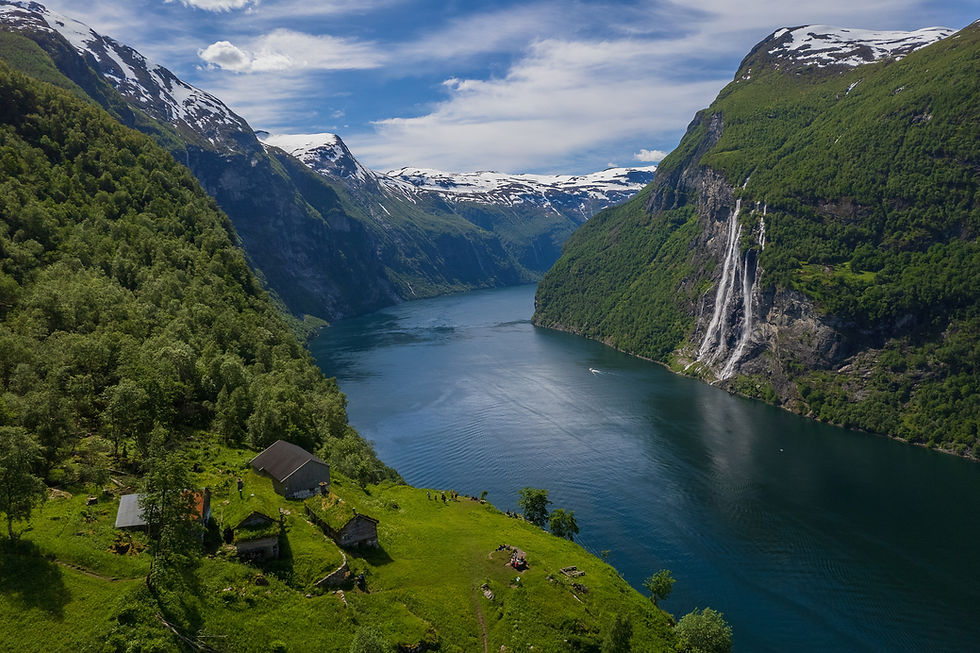
The route then continues north through glacier country and along deep fjord systems toward the legendary Geirangerfjord, famed for its sheer cliffs and cascading waterfalls—arguably the quintessential Norwegian postcard view.
From the dramatic coast, the tour turns eastward into the high mountains before descending toward the country’s refined capital, Oslo.
By linking Bergen’s maritime charm, the fjords’ raw grandeur, the mountain heartland, and Oslo’s cultural sophistication, this route offers a comprehensive, highlight-rich exploration of Norway—ideal for travellers seeking a complete fjord and mountain experience in one expertly designed journey.
Natural highlights of Norway
Signature Norway Fjords Adventure immerses you in a sequence of Norway’s most striking natural highlights, moving from deep coastal fjord landscapes to lofty mountain panoramas in a compelling, narrative arc. The legendary Flåm Railway reveals plunging waterfalls, steep valley walls, and panoramas that epitomize Norway’s rugged topography.
From Flåm, gliding through the narrow, UNESCO-listed Nærøyfjord on a private cruise places you amid towering cliffs and mirrored waters, showcasing one of the most celebrated fjord experiences in the world.
Continuing west, the route pauses at Bøyabreen Glacier, where ancient ice and moraine frame a starkly beautiful glacial landscape. Then the ascent via the Loen Skylift sweeps you from sea level up to the heights above Nordfjord, where panoramic mountain and fjord vistas unfold in every direction.
At Geirangerfjord, one of Norway’s most iconic fjords, the natural theatre of cascading waterfalls like the Seven Sisters echo against steep valley walls, and ascending toward the Dalsnibba plateau delivers a breathtaking overlook of fjord ribbons cutting through snow-tipped mountains.
Next, you pass near Jotunheimen, home to some of Scandinavia’s tallest peaks. This transition from fjordland to alpine interior reveals the full geographic diversity of Norway
Norway's culture and history
Signature Norway Fjords Adventure is also rich with cultural experiences that go far beyond sightseeing, weaving authentic Norwegian life, history, traditions, and storytelling into the journey. From the very start, you’re invited to connect with the local context through guided discussions that unpack how the country’s geography has shaped its people and culture, setting an interpretive frame that deepens everything you see later.
Surrounded by seven mountains and facing the North Sea, Bergen introduces travellers to Norway’s maritime heritage, colourful Bryggen wharf, and dramatic coastal scenery. You’ll join a walking orientation through Bergen's historic streets, where architectural legacies and centuries-old trading traditions are still evident in vibrant waterfront districts and markets, and you’ll have free time to explore museums or enjoy local cuisine on your own.

Also included is a visit to the remarkable Borgund Stave Church, among Norway’s finest surviving medieval wooden churches, dating to the 12th century. Admire its intricate wood carvings and distinctive dragon-headed roof details that reflect centuries-old craftsmanship and Norse symbolism.
Community connections are central to the experience: a visit to a family-run farm introduces you to rural rhythms and traditional practices, capped with a farm-to-table lunch that showcases regional produce and the agrarian side of Norwegian life.
Native cultural customs take centre stage with a guided sauna and cold-water dip, a practice that’s been woven into social life for generations and remains a hallmark of local wellness traditions.
Along the way, curated access to small-group experiences—such as private visits with curators or conversations with interpreters connected to historic figures—adds layers of storytelling and context that elevate your understanding of Scandinavia’s seafaring legacy and scientific heritage.
These immersive moments, balanced with plenty of relaxed exploration, make the tour not just a passage through scenic landscapes but a deeply engaging cultural journey through Norway’s past and present.

Norway’s Landscapes by Train, Boat, and Car
Throughout the trip, the itinerary includes a mix of modes of travel that keeps the pace thoughtful rather than rushed. Private vehicles, public trains, cruise boats and gondolas move you through different layers of the landscape, each offering a distinct vantage point. This variety matters: seeing a fjord from the water feels entirely different than glancing down from a mountainside pass or sharing an apple farm’s orchard walk in the cool afternoon. These transitions shape a narrative of Norway as a place defined by movement and perspective.

Thoughtfully designed Norway Itinerary
From a travel‑planning perspective, what makes this tour especially effective is how it weaves those multiple experiences into a coherent whole. Many itineraries tick off scenic railways, hikes or fjord cruises, but few do so with the same narrative logic this one offers: each moment builds on the last, reinforcing a sense of place that’s both specific and layered. Transport logistics are handled seamlessly, meals and accommodations are considered, and the group size remains small enough to feel personalised without exaggerating the “exclusive” language that can sometimes make travel writing feel hollow.
Optimal Seasons to Explore Norway’s Landscapes
Seasonality also factors into the itinerary’s success. Summer and early autumn bring long daylight hours and milder weather, conditions that support everything from high‑elevation viewpoints to relaxed walks through fruit orchards. By integrating the natural timing of the landscape into the flow of the trip, the tour helps travellers make the most of what Norway does best: unhurried appreciation of its terrain and heritage.
Signature Norway Fjords: Complete Travel Experience
For anyone wondering about the practicalities of a Norway Fjords itinerary, this tour provides a template that’s both ambitious and grounded. You experience the fjords from the water and above, you move from historic ports to highland valleys by rail, and you end with an urban cultural finale that ties together the region’s historical threads. Most importantly, you return not just with photos but with a richer sense of why the fjords matter—how they were formed, how people have lived around them, and how the landscape continues to shape culture and identity.
In sum, the Signature Norway Fjords Adventure doesn’t ask you to chase views for their own sake. Instead, it offers a sequence of landscapes and moments that illuminate why these fjords, vistas and cultural touchstones endure as travel priorities. For those who want a journey that feels both complete and reflective, this itinerary delivers a depth of experience that aligns with thoughtful travel rather than ticking boxes.


Comments